



We use cookies to deliver the best possible experience on our website. By continuing to use this site, or closing this box, you consent to our use of cookies.

Faucets
Faucets - Water Taps
Faucets are precision-engineered fixtures that control water flow and temperature for sinks, basins, and showers. Modern designs combine smooth operation with durable materials, efficient water use, and ergonomic handles to enhance everyday routines while supporting hygiene, comfort, and long-lasting performance across bathroom and kitchen applications.
Jaquar faucets provide a smooth cleansing experience with their high-quality performance and eye-catching designs. With our wide range of showers, sanitary ware, and designer taps for washbasins and showers. Not just these but Jaquar has an amazing collection of bathroom faucets including bathroom mixer taps and bathroom tap sets.
We help you in your search for an affordable and elegant bathroom design. Jaquar bathroom faucets provide true and complete bathroom solutions to every household.
Show Flaunt your faucets for bathroom
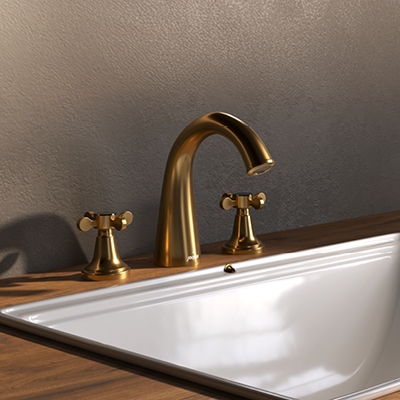
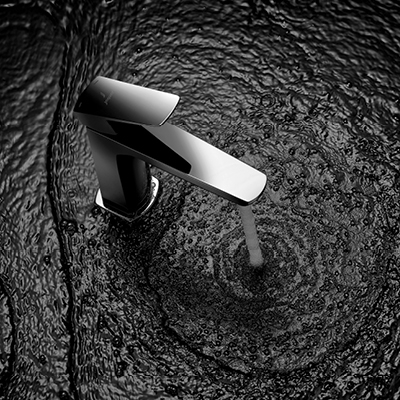
Much like the saying ‘the beauty lies in the details’, faucets are an integral part of your bathroom or kitchen’s overall appeal. With the perfect choice of bathroom tap sets or water taps, you can create your ideal look. The sleek chrome-finish bath faucets can give them a contemporary minimalist look while antique-finish designer taps match your sanitaryware and provide a royal look out of your normal bathroom.

Show Features of jaquar faucets
Jaquar faucets are unique and bold in style, design and finish. Their excellence in manufacturing makes them the perfect choice of fancy taps for washbasins in kitchens and bathrooms taps. What makes Jaquar wash basin taps stand out? So what makes Jaquar bathroom faucets the best in the market? Here are some features:
- 01
Cartridges
- A cartridge is an important part of faucets responsible for controlling the water supply in the bathroom taps. Cartridges of Jaquar taps are half a million cycles tested to give a longer and trouble-free operating life of up to 20 years. This ensures the maximum life of your kitchen taps, water tap, tap shower, bathroom faucet, etc providing a great value for money.
- Wide-angle lever provides ultra comfort and flawless, smooth operation of the Jaquar bathroom faucet.
- We make the cartridge spindle of the washbasin taps with brass instead of plastic, to avoid breakage.
- The bathroom faucets work smoothly even at high temperatures and in various pressure conditions.
- 02
Jaquar Care
- Jaquar ensures round-the-clock customer service for bathroom tap sets and bathroom faucets. Jaquar has an extensive service network of trained personnel who offer on-site plumbing guidelines and maintenance services besides regular check-ups. We ensure:
- Optimum Flow and Temperature
- Smooth Operation
- Higher Durability and Longevity
- Unmatched Warranty
- Advanced Water Saving Flow Regulator
- 03
Aerators
- Every Jaquar basin tap comes fitted with aerators, which are devices that mix air with water to give it a soft and splash-free flow.
- Our integrated honeycomb-structured aerator, which is a part of every tap for bathroom and bathroom faucets, provides lime build-up protection.
- Integrated anti-clogging dome screen of the aerator filters dust particles and sediments.
- 04
Multiple Finishes
- Jaquar’s faucets are available in multiple colours and PVD colours to match every bathroom style.
- The chrome finish for every curated Jaquar tap including bathroom mixer taps, water taps, tap showers, etc comes with high plating thickness and it provides tolerance to extreme climate and water conditions, causing minimal wear and tear.
- 450+ hours of salt spray test ensures every Jaquar washbasin tap, your faucet for bathroom, water tap, tap shower, mixer tap bathroom, etc is highly durable and corrosion-resistant for a much longer duration.
- 05
Unmatched Warranty
Jaquar’s range of products are precision engineered and are made to exacting quality standards and come with a 10-Year Warranty. At Jaquar, we make the best taps for washbasins with an unmatched warranty.
Keeping in mind your budget and design requirements, you can connect with our highly trained professionals for a virtual consultation for finding the right Jaquar bathroom faucets!
Show A buying guide: bathroom faucets and bathroom taps
Here is a checklist of things to remember before purchasing a faucet tap for your bathroom:
- What colour or finish do I want my faucet tap to be?
- How will the faucet be mounted to the bathroom sink?
- What kind of spout, drain and aerator do I want?
- What faucet handle is the most convenient for my home?
- How will my faucet complement the design of my bathroom?
- What is my budget for purchasing a faucet tap?
Asking these questions before purchasing will help you narrow down your choices to finalise the perfect tap for the bathroom. To know more you can also look at in detail the things you should know before buying a faucet tap.

Show Buying the right bathroom faucet tap at Jaquar
Modern washbasin design can dictate the look and feel of your entire kitchen or bathroom space. Given the sheer volume of brands, designs, sizes, styles, features and functionality of faucets and designer taps for washbasins, it might be a laborious task to buy the right faucet tap for you.
With a plethora of faucets online including mixer tap for bathrooms and water taps, the task can get even more arduous without hands-on experience. Therefore, you must do your research about the best faucet taps, and get guidance from a professional before purchasing.
Faucet taps can differ even according to the use and place of installation. For example, bathroom tap sets are not perfect in the kitchen and we cannot use a washbasin long tap that is usually used in kitchen sinks in a luxury bathroom set-up.
Jaquar offers professional help virtually to customers wanting to buy sanitaryware online with our robust online service. You can go through the wide range of faucets including kitchen faucets, mixer bathroom tap, water taps, etc. online from the safety of your own home. A few things to keep in mind when you want to buy taps online are:
- While looks are important, it is imperative to check your future bathroom faucets for convenience and long-term dependability
- Understand the handwash sink design you are setting your faucet up in and the type of bathroom tap sets that will go with it. The exquisite range of bathroom faucets at Jaquar will get you exactly what you want.
Knowledge about the water pressure of your pipes is crucial. This is because the water pressure differs with the type of bathroom faucet.
Show Why Jaquar faucet taps are best?
Jaquar hosts a wide range of the latest taps for bathrooms and faucets. The in-house, award-winning design team integrates luxurious design in its approach and helps produce 125,000 Jaquar bathroom taps per day.
- Reputed designers conceptualise and curate the collection of designer taps for washbasin at Jaquar.
- Jaquar faucets are made in state-of-the-art manufacturing units and conform to the highest quality and regulatory standards.
- Jaquar’s passion for perfection reflects in the 10 years of warranty it extends on its washbasin taps and faucets.
- Jaquar bathroom taps are a constant favourite among the masses owing to their affordability without compromising on design.
The bathroom faucets online comprise 17 ranges to suit various design needs, including luxury taps for luxury bathroom concepts. Jaquar’s collection of basin taps includes single-lever, quarter turn and multi-turn operations. The Jaquar washbasin taps come in a variety of colours and features. Ensure that your basin taps suit the washbasin designs you have in mind. You can also look at economical tips for renovating your bathroom and turning it into your dream space.

Planning Faucet Selection Around the Entire Space
Selecting a faucet should begin with the basin, sink or bath it will serve, rather than the appearance of the fitting alone. The surrounding layout, available mounting surface, water connections, user needs and maintenance access all influence whether a particular model is appropriate.
A faucet that looks suitable in a product image may not provide enough clearance for handwashing, may direct water too close to the basin edge, or may require a mounting arrangement that the countertop cannot accommodate. Considering these practical details early helps avoid unnecessary changes during installation.
For bathroom projects, coordinate the faucet with the basin, vanity, mirror, lighting and nearby fittings. In a kitchen, the sink dimensions, depth, surrounding worktop and everyday tasks are equally important. A faucet used mainly for handwashing has different practical requirements from one expected to accommodate larger containers or frequent food preparation.
The product's technical drawing should be part of the selection process. Review the dimensions, mounting configuration, connections and installation instructions for the exact model. Where compatibility is uncertain, ask the supplier or a qualified plumbing professional to assess the proposed combination before purchase.
Matching Faucet Geometry to Basin Design
Spout height and reach determine where water enters the basin and how much room is available beneath the outlet. These dimensions should be considered together with basin depth, rim height and the position of the waste outlet.
A tall faucet can provide more vertical clearance, but height alone does not guarantee a good fit. If the spout projects too far forward or the water lands near the basin's edge, splashing may occur. A short spout may create insufficient room for handwashing, particularly when paired with a deep or unusually shaped basin.
Spout height and reach
Spout height is the vertical distance associated with the outlet, measured according to the product drawing. Spout reach describes how far the outlet extends horizontally from its mounting reference point. Manufacturers may define and illustrate these measurements differently, so use the supplied technical drawing when comparing products.
Assess the position where the water stream is expected to land. Ideally, the outlet should work with the basin's usable area, allowing everyday tasks without directing water onto the countertop or creating unnecessary splashing. The exact fit depends on the shape and depth of both components.
Clearance and water landing position
The space between the spout and the basin affects hand clearance and ease of use. Too little room can make the fitting awkward to operate, while an unnecessarily high outlet can increase splash risk in some combinations.
Consider the user's normal activities, including handwashing, face washing and filling containers where relevant. If the basin has a sloping interior, a narrow bowl or an offset waste outlet, check the expected water landing position carefully.
For more complex combinations, compare the basin drawing with the faucet drawing or request advice from the supplier. General rules of thumb cannot replace a dimensional compatibility check.
Choosing Faucets for Different Basin Configurations
Different basin designs place different demands on a faucet. The most suitable configuration depends on the rim, countertop, mounting holes, basin depth and position of the water outlet.
Countertop vessel basins
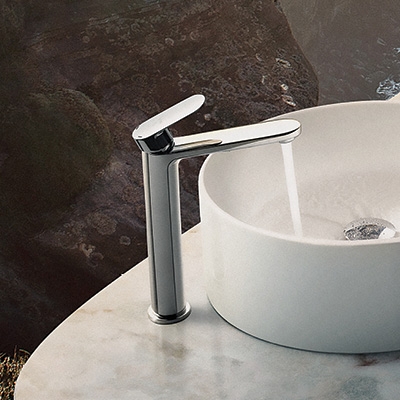
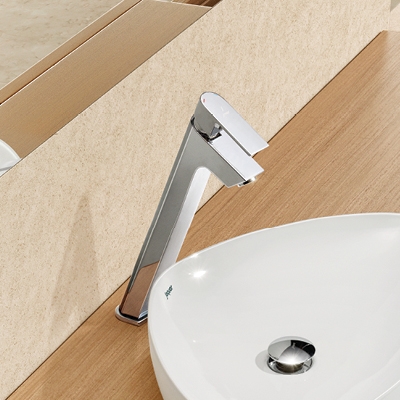
A vessel basin sits above the countertop and often has a raised rim. The faucet must provide suitable clearance above that rim and sufficient reach into the bowl. A taller basin mixer may be appropriate in some installations, but its dimensions must be checked against the actual vessel.
Consider the combined height of the countertop, basin and faucet. The handle must remain accessible, and the water should enter the basin rather than strike the rim or fall close to the edge. A wall-mounted option may also be possible where the product and plumbing layout support it.
Integrated and under-counter basins
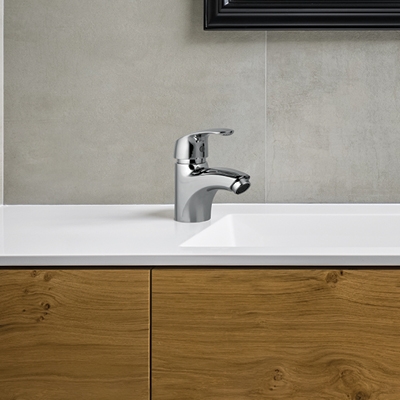
Integrated basins and under-counter designs generally sit closer to the countertop surface than vessel basins. Depending on the configuration, a lower faucet may provide sufficient clearance while keeping the overall arrangement visually balanced.
Check whether the faucet mounting hole is located in the basin, the countertop or a separate mounting surface. Also verify that there is enough room beneath the countertop for the fixing system and supply connections.
Wall-hung and compact washbasins
Compact basins often have limited rim space and may offer less room for faucet mounting and hand movement. A short-reach faucet can be suitable in some situations, but it must still direct water into the usable area of the bowl.
For wall-hung basins, the position of the plumbing outlets and the mounting surface may restrict the available options. Review the dimensions and access requirements before choosing a fitting.
Larger or shared washbasins
Larger basins may require a different balance of reach, outlet position and user clearance. Where several people use a wash area, consider whether the fitting's position allows comfortable access without obstructing adjacent users or nearby fixtures.
For any basin configuration, check the manufacturer's dimensions rather than assuming that a faucet from the same design collection will automatically fit.
Deck-Mounted, Wall-Mounted and Floor-Mounted Faucets
Mounting style affects the appearance of a bathroom and the practical work required to install and maintain a faucet. Jaquar's Sri Lankan product filters include deck, countertop, tabletop, wall and floor mounting options, although the availability of each configuration varies by product.
Jaquar
Deck-mounted and countertop installations
Deck-mounted faucets are fixed to a basin rim, countertop or another suitable horizontal surface, depending on the model. This arrangement can simplify access to visible components, but the mounting surface must have the correct space, thickness and hole configuration.
Before purchase, verify the number and spacing of mounting holes, the available area around the faucet and the space required underneath for connections and fixings. A basin with pre-drilled holes may restrict the choice of products, while a countertop installation may require additional preparation.
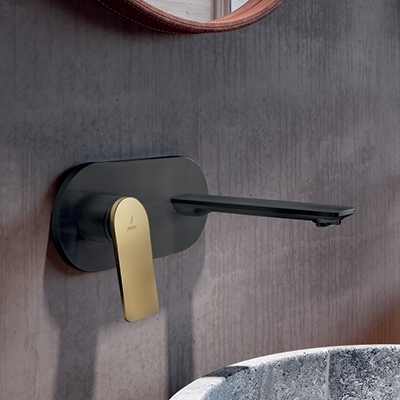
Wall-mounted faucets
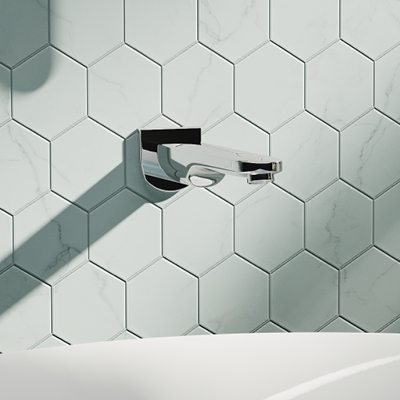
Wall-mounted faucets free up the horizontal surface and can create a clear visual line above the basin. Their position needs to be planned in relation to basin height, spout reach, the expected water landing point and the user's operating position.
The plumbing outlets and mounting structure must align with the selected product. If the fitting uses concealed components, these need to be installed at the correct depth and position before the wall is finished.
Floor-mounted bath mixers
Floor-mounted bath mixers are a specialised option for compatible bathtub arrangements. The location of the bath, the position of the filler and the routing of the supply pipework all affect suitability.
Confirm that the product is designed for the intended installation and that the required connections can be accommodated. The faucet must be coordinated with the bathtub's dimensions and surrounding access space rather than positioned solely for visual effect.
For all three mounting styles, confirm the exact installation requirements before construction or renovation work begins.
Selecting Faucets for Different Applications
The best faucet configuration depends on how the space is used, how often it will be used and the practical needs of its occupants.
Guest and powder rooms
Guest bathrooms and powder rooms often use compact basins and have limited counter space. A fitting with appropriate reach and simple operation can help preserve usable space. Design coordination may also be important because the faucet is often a visible element in a small room.
Check the dimensions of the basin and any nearby mirror, shelf or wall surface before deciding on the mounting arrangement.
Family bathrooms and en-suites
Family bathrooms are used by people with different routines and preferences. Ease of operation, adequate hand clearance and straightforward cleaning are useful considerations. In an en-suite, the faucet should also suit the basin's size and the available vanity area.
Where the bathroom will be shared frequently, consider the accessibility of handles and the practicality of cleaning around the base and connections.
Kitchens and utility areas
Kitchen faucets should be evaluated around the sink and the tasks carried out there. Consider the depth and shape of the sink, the distance between the faucet and the bowl, and the space available for filling containers or cleaning larger items.
Check the product's documented function and compatibility before selecting features such as a swivel spout or pull-out spray, since these are not standard across every faucet collection. For utility areas, prioritise fit, access and ease of maintenance over decorative details that may not serve the intended use.
Hospitality and commercial washrooms
Higher-use environments need careful attention to product suitability, operation, cleaning and servicing. A fitting that works well in a private home should not automatically be assumed suitable for a hotel, office or other commercial application.
Review the intended-use documentation, the anticipated usage pattern and the local requirements relevant to the project. Where sensor-operated or press-operated products are being considered, confirm their specific operating requirements and suitability for the installation.
Understanding Faucet Controls and Operating Mechanisms
The control mechanism affects how users adjust water flow and temperature. It should suit the expected users and the water supply arrangement at the installation site.
A single-lever mixer allows flow and temperature to be adjusted through one control. Separate controls use distinct operating points, which may suit particular designs or user preferences. The choice should account for how intuitively the controls can be reached and operated.
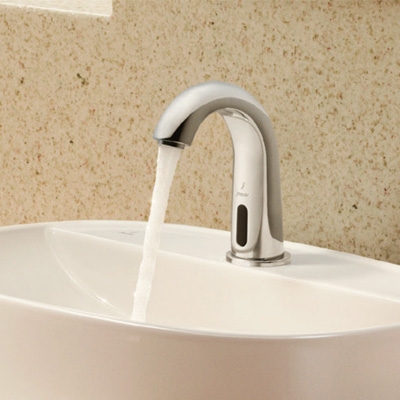
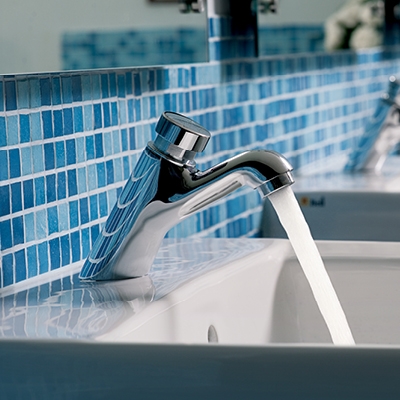
Sensor-operated faucets activate through a detection system, while press-operated models use a timed or press-based mechanism according to their design. These options may be relevant in selected shared-use settings, but their power, connection and operating requirements must be checked for the exact model.
Thermostatic mixers are designed to regulate mixed-water temperature according to the product's mechanism. They should not be treated as interchangeable with a standard mixer, and their installation requirements depend on the specific product and water system.
The availability of single-lever, press-operated, sensor and thermostatic products in the wider category does not mean every control type is suitable for every application. Review the model documentation and consider user familiarity, maintenance needs and local installation conditions before choosing.
Faucet Compatibility With Water Supply and Plumbing
A faucet must be compatible with the building's water supply and the plumbing arrangement at the installation point. Appearance and mounting style alone cannot establish whether a product will operate correctly.
Hot and cold water connections
Determine whether the installation has separate hot and cold supplies, a single supply or another arrangement specified for the chosen product. The faucet or mixer must be designed for that configuration. Do not assume that every mixer can be connected to any hot-water system without additional checks.
Review the manufacturer's instructions for inlet configuration, connection dimensions and any requirements related to the water-heating system. Where the existing plumbing differs from the product specification, have a qualified professional assess what changes may be needed.
Water pressure and flow
Water pressure can influence faucet performance, but the required operating range varies by product. A system with low or inconsistent pressure may not provide the expected flow from a particular fitting. Conversely, a supply that exceeds the permitted operating conditions may require corrective measures.
Check the minimum and maximum pressure values in the product documentation, where specified. If several fittings share the same supply, the plumbing layout and simultaneous demand may also affect the flow available at each outlet.
Flow rate and pressure are related but are not identical. A faucet's outlet design and internal components also influence how water is delivered. Do not use a general category description as proof that a particular model will perform under every pressure condition.
Connections and mounting compatibility
Before installation, confirm:
- The required connection dimensions and inlet arrangement.
- The mounting-hole count and spacing.
- The available space beneath or behind the mounting surface.
- Compatibility with any required concealed valve or body.
- Whether additional components are needed to complete the installation.
Where the product is replacing an existing fitting, compare its installation requirements with the existing plumbing rather than assuming that the connections will match. A qualified plumber can assess compatibility where the information is incomplete.
Planning Concealed and In-Wall Faucet Installations
Concealed faucet installations place some operating components inside the wall, leaving the visible controls and spout exposed. This arrangement can create a more streamlined appearance, but it requires accurate coordination between the selected trim, the concealed body and the plumbing.
The concealed component must be compatible with the visible faucet parts. Matching products by appearance alone is insufficient because different systems may use different installation bodies, connection arrangements and mounting depths.
Plan before wall finishing
The faucet's position should be established in relation to the basin, countertop, wall finish and user reach. Confirm the specified installation depth and alignment before tiling or closing the wall. The concealed system must be fitted according to the manufacturer's instructions.
The water outlet should also align with the intended landing area inside the basin. If the spout position is fixed before the basin is finalised, an unsuitable combination can be difficult to correct later.
Preserve maintenance access
Concealed installation does not remove the need for future maintenance. The design should allow the serviceable parts to be accessed as described in the product instructions. The exact access method depends on the system.
Before construction, confirm which components sit behind the wall, which remain accessible from the front and what provisions are required for inspection or replacement. Coordinate the plumbing work with the architect, designer and installer where several trades are involved.
For renovation projects, determine whether the existing concealed body can be retained or whether it must be replaced. Do not assume that a new visible trim is compatible with an older in-wall component without explicit confirmation from the manufacturer.
Coordinating Faucet Finishes With Bathroom Design
Faucet finishes contribute to the visual relationship between the basin, sanitaryware, shower fittings, cabinetry and other visible details. The aim is to create a coherent composition while ensuring that the selected product meets the practical requirements of the installation.
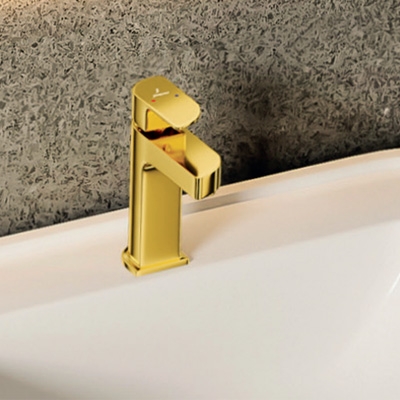
Chrome can complement a wide range of bathroom materials, while darker or warmer-toned finishes can introduce contrast. The appropriate choice depends on the surrounding surfaces, lighting and the appearance of other fittings. The available finishes vary by collection and model, so confirm the options for the specific product.
Coordinate related fixtures
When selecting a faucet for a complete bathroom, consider its relationship with the shower fittings, bath controls, handles, towel holders and other visible hardware. A consistent finish can connect the different areas of the room, while a deliberate contrast can distinguish particular features.
For example, a basin faucet does not necessarily have to match every metal detail exactly, but any variation should appear intentional. Consider the visual weight of each fitting and how frequently the finish appears across the room.
The wider showers collection can be reviewed when coordinating the basin faucet with the shower area.
Consider the surrounding materials
Countertop materials, tile colours, basin shapes and cabinet finishes influence how a faucet appears once installed. A high-contrast faucet can become a focal point, while a finish closer to the surrounding palette can create a more understated effect.
Lighting can also change how a surface appears. Where possible, compare finish samples or product imagery under conditions similar to the intended room. Do not assume that names or images alone guarantee an exact visual match between different products.
Selecting Faucets for Shared and High-Use Spaces
Faucets used frequently by multiple people need to be selected with operation, cleaning and servicing in mind. The appropriate product depends on the environment, intended use and documented suitability, rather than on appearance alone.
Ease of use
Consider whether the controls are easy to understand and operate for the intended users. Lever position, handle movement, reach and the amount of space available around the basin can affect day-to-day convenience.
Sensor-operated or press-operated faucets may suit some shared-use settings, depending on their design and operating requirements. Check how each model is activated, what power or plumbing arrangements it needs, and how it is serviced.
Cleaning and service planning
In high-use environments, the shape of the faucet and the surrounding installation can affect how easily surfaces are cleaned. Consider access around the base, handles, spout and adjacent countertop. Avoid layouts that make routine cleaning unnecessarily difficult.
For hospitality and commercial projects, confirm that the selected model is intended for the application. Review service availability, replacement-component support and the installation requirements before specifying products across multiple rooms.
Do not assume that a sensor faucet automatically provides better hygiene or lower water consumption in every setting. Those outcomes depend on product design, operating conditions and user behaviour.
Water Flow, Aeration and Responsible Water Use
Water flow influences the practical experience of using a faucet and the amount of water delivered during a task. Aerators and flow regulators can affect how water exits the outlet, but their design and performance vary between products.
An aerator introduces air into the water stream or shapes the flow through the outlet. Depending on its design, it may help create a more controlled stream and influence the sensation of flow. It should not be assumed to eliminate splashing in every basin or deliver the same result under all water-pressure conditions.
A flow regulator is intended to control flow according to its design. Where a specific faucet includes one, review the manufacturer's documentation to understand the product's stated function. Do not assume that every faucet has the same regulator or that a regulator guarantees a particular percentage of water savings.
Actual water use depends on the installed faucet, the available pressure, how long the water runs and how the fitting is used. A product's flow rate should be taken from its official technical information rather than inferred from its appearance or product category.
When water use is an important project consideration, compare verified flow information for the shortlisted products and confirm that the selected configuration is appropriate for the local supply. A qualified plumbing professional can advise on compatibility where pressure or system performance is uncertain.
Understanding Faucet Materials, Finishes and Long-Term Performance
The long-term appearance and performance of a faucet depend on its construction, finish, installation environment, water conditions and care. Product descriptions should be interpreted in the context of the specific model rather than applied to an entire collection without evidence.
Construction and product specifications
The material composition of a faucet body, the design of its internal components and the applied finish are separate considerations. A product's visible surface does not necessarily reveal its underlying material or construction method.
Check the product's technical documentation for verified material and finish information. If a particular composition or test result matters to the project, ask for the relevant specification rather than assuming that products with similar appearances use identical materials.
Water characteristics and installation conditions
Water characteristics can influence cleaning needs and the accumulation of mineral deposits. The surrounding environment and installation quality may also affect the condition of the faucet over time.
In areas where mineral deposits are common, routine cleaning according to the manufacturer's instructions can help maintain the appearance of the outlet and visible surfaces. Any specific resistance or durability claim should be supported by the documentation for the relevant product and finish.
Evaluate the finish as a product-specific feature
Different finishes may have different cleaning requirements. A method suitable for one surface may be inappropriate for another. Check the care guidance for the chosen finish, especially where it has a specialist coating or decorative treatment.
Avoid describing a finish as maintenance-free or promising a fixed service life without supporting product-specific evidence. A more useful selection process considers the finish's appearance, the manufacturer's care instructions and the practical conditions of use.
Cleaning and Caring for Different Faucet Finishes
Routine cleaning helps maintain the appearance of faucets and reduces the accumulation of water spots, soap residue and mineral deposits. The correct method depends on the product's surface and the manufacturer's care instructions.
Everyday cleaning
For routine care, use a soft cloth and a cleaning method approved for the particular faucet finish. Remove residue before it builds up, and follow the manufacturer's directions about rinsing and drying the surface.
Pay attention to areas around handles, the base, the spout and other points where water or residue may collect. Cleaning these areas regularly can help prevent visible deposits from becoming more difficult to remove.
Mineral deposits and aerator care
Mineral deposits may accumulate around the water outlet, particularly where water contains higher levels of dissolved minerals. If the outlet becomes visibly obstructed or the water stream changes, consult the product instructions to determine whether the aerator can be cleaned and how that should be done.
Do not force components apart or use tools that could damage the finish. If the component is not intended for user removal, or the correct procedure is unclear, seek advice from the supplier or an appropriate service professional.
Protect specialist finishes
Avoid abrasive pads, aggressive scrubbing and unapproved chemicals. These methods may mark the surface or affect a coating. Do not assume that a cleaner marketed for general bathroom use is suitable for every faucet finish.
For specialist finishes, consult the manufacturer's care guidance before applying any cleaning agent. If the recommended method is unclear, confirm it with the supplier rather than testing an unfamiliar product on a visible surface.
Faucet Selection for Renovation Projects
Replacing a faucet during renovation can be straightforward when the new product matches the existing installation. However, changes to the mounting style, connections or basin arrangement may require additional plumbing or surface work.
Inspect the existing installation
Before choosing a replacement, identify how the current faucet is mounted and how its water connections are arranged. Check the number and spacing of mounting holes, the available space below the basin and the condition of the surrounding countertop or wall.
For a wall-mounted faucet, establish whether the existing concealed body is compatible with the intended replacement. For a deck-mounted product, verify that the mounting surface can accommodate the new fitting and that its reach and height work with the basin.
Check the basin and countertop together
A replacement faucet may have different dimensions from the existing model even if both products look similar. Compare the technical drawings and confirm that the new spout will direct water into the basin appropriately.
If the new faucet is taller, wider or has a different reach, check that it will not interfere with mirrors, shelves, cabinet doors or other nearby features. Consider the location of handles and the space needed to operate them.
Decide whether professional work is required
Some replacements may fit the existing arrangement, while others can involve changes to pipework, wall finishes or mounting surfaces. Do not assume that a fitting will be compatible simply because it belongs to the same product category.
Where the plumbing configuration or concealed components are uncertain, have a qualified professional assess the installation before purchase. This can help establish the work required and reduce the risk of discovering compatibility issues after the renovation has begun.
Common Faucet Selection Mistakes
A few practical checks can prevent avoidable problems when selecting faucets for a new bathroom or replacing existing fittings.
- Choosing by appearance alone: Review the dimensions, mounting requirements and water connections alongside the design. A visually suitable product still needs to fit the basin and plumbing.
- Ignoring spout reach: Check where the water is expected to land. An outlet that is too short or too far forward may reduce usability or contribute to splashing.
- Overlooking basin depth: Consider the relationship between outlet height, basin depth and rim position. Do not assume that one faucet suits every vessel or countertop basin.
- Assuming mounting styles are interchangeable: Verify whether the product is designed for deck, wall, countertop or floor mounting. Each arrangement has different installation requirements.
- Ignoring supply conditions: Check the specified operating pressure and connections against the existing system. Ask a plumber to assess uncertain or inconsistent supply conditions.
- Selecting a finish without checking care requirements: Review the manufacturer's cleaning guidance before choosing a specialist surface.
- Forgetting concealed components: Confirm compatibility between visible controls, spouts and the concealed body before wall finishing.
- Overlooking service access: Ensure that serviceable components can be reached as required by the product instructions.
- Assuming all products in a collection are identical: Confirm the features, dimensions and available finishes of the exact model rather than generalising from another item in the range.
A Practical Faucet Selection Framework
A structured selection process makes it easier to compare suitable products and identify installation issues before purchase.
- Define the application. Establish whether the faucet is intended for a bathroom basin, kitchen sink, bathtub, shower, bidet or another use.
- Confirm the basin or fixture configuration. Identify the shape, depth, rim height, mounting surface and available space.
- Choose the mounting arrangement. Determine whether deck, countertop, wall or floor mounting is suitable for the intended installation.
- Check spout height and reach. Compare the product dimensions with the basin or bath and verify the expected water landing position.
- Review the water supply. Confirm hot and cold connections, specified pressure conditions and any relevant requirements for the water-heating system.
- Select the control mechanism. Consider the intended users, ease of operation and the documented functions of the selected model.
- Coordinate the finish. Review the faucet alongside the basin, shower fittings, cabinetry and other visible details.
- Understand cleaning requirements. Check the care instructions for the particular finish and any accessible outlet components.
- Review installation documentation. Use the current product drawing and instructions to confirm dimensions, connections and compatibility.
- Plan service and support. Consider access to maintainable components and confirm the availability of appropriate local assistance where needed.
This process helps distinguish products that merely look similar from those that meet the practical requirements of the project. For new installations, it also helps designers, homeowners and plumbing professionals coordinate the faucet with the wider space before construction is complete.
The Sri Lankan faucet collection includes multiple product families and application types, but the specifications and availability of individual models can differ. Review the documentation for the exact product and confirm its suitability with the local supplier or a qualified professional before finalising the installation.
For a coordinated bathroom scheme, the wider bath accessories range can help align the faucet with other visible fittings, while the bath tubs collection provides options to consider when planning the bathing area. The aim is to select products that work together in the actual layout, meet the installation requirements and remain practical to use and maintain.
Show Features of Faucets

Soft Water Flow

Operates Smoothly

Jaquar Care

Higher Longevity Optimum

Advanced Water Saving Flow Regulator

Higher Durability (0.3µ Chrome + 10µ Nickel)

Optimum Flow and Temperature

*Unmatched Warranty
GLOBAL QUALITY CERTIFICATIONS

KIWA

SON

ISO

CE

TISI

SASO

PZH

ZNAK-B

CIDB

PUB

SABS

DVGW
FAQs:
A Faucet tap is a simple valve that controls the release of water while a mixer is a device that has the mechanism to mix both hot and cold water together. A mixer also lets you control the flow of the water and the temperature.
Feature | Tap | Mixer |
Function | Supplies either hot or cold water separately | Blends hot and cold water together |
Control | Usually one handle for one supply | Single or dual controls for precise adjustment |
Convenience | Simple, traditional usage | Greater comfort and control over temperature |
Best For | Basic water supply points | Modern bathrooms and kitchens needing efficiency and style |
Faucets come in various styles to suit different needs and bathroom designs. The most common include:
- Sensor Taps: Touch-free, hygienic, and water-saving.
- Pillar Taps: combine hot and cold water for controlled flow.
- Mixer Taps: combine hot and cold water for controlled flow.
- Bathtub Spout: Controls the flow of water into the bathtub
- Wall mounted Taps: save counter space and look sleek.
- Deck Mounted Faucets: fixed directly onto basins or counters.
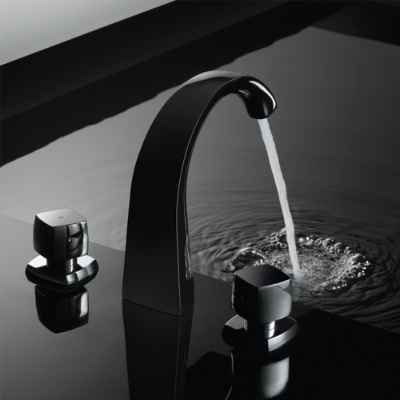
- 3 hole basin Taps: a basin faucet with 3 holes for spout and hot and cold water controls
- Tall basin faucets: designed for countertop wash basins.
- Tall basin Mixer Taps: an extended-height single-spout countertop basin faucet to mix hot and cold water
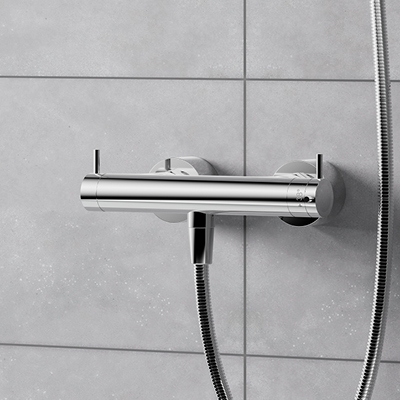
- Thermostatic Shower Mixer: a device with a thermostatic mixing valve to mix blends of hot and cold water automatically
The common reasons for a leaky faucet are:
- Mineral deposits on the internal parts
- Corrosion due to usage
- Defective parts such as washers, gaskets, o-rings
- Improper installation of the faucet
- If you have encountered a leaky faucet, learning how to fix a leaking tap or faucet can help you solve the issue quickly and independently.
A faucet is made up of several key components:
- Spout: directs water into the basin.
- Handle or lever: controls flow and temperature.
- Cartridge/valve: regulates the mix of hot and cold water.
- Aerator: mixes air with water to create a smooth stream.
- Body: houses the internal mechanism.
- Mounting hardware: secures the faucet to the basin or counter.
The usual signs of a faulty faucet cartridge are:
- Water leaks from the spout of the faucet
- Facing difficulties in adjusting the temperature of the water
- Unnecessary mixing of hot and cold water lines ie, hot water running out of a cold water outlet
- Inadequate heating of water at the required outlets
How do I fix a leaky faucet?
Fixing a leaky faucet involves a few simple steps:
- Turn off the water supply to prevent flooding.- Disassemble the faucet using a screwdriver or wrench.
- Identify the faulty part, usually a worn washer, O-ring, or cartridge.
- Replace the damaged part with a new one.
- Reassemble the faucet and turn on the water supply to check for leaks.
- If leakage persists, professional servicing is recommended.
How do I choose the right faucet for my bathroom?
The right faucet balances design, durability, and functionality. First, match the faucet style with your basin type—tall mixers for counter-top basins, compact faucets for wall-hung sinks. Check the finish, such as chrome or matte, to complement your décor. Look for features like aerators for water efficiency and ergonomic handles for ease of use. Choosing a well-built faucet with warranty and after-sales support ensures long-term reliability and adds elegance to your bathroom.
What is the most common type of faucet?
The single-lever mixer faucet is the most widely used today. It combines hot and cold water supplies into one spout, controlled by a single handle for easy adjustment. Its popularity comes from convenience, modern styling, and efficiency. Suitable for most basins, this faucet offers both functionality and a clean, minimal look, making it the preferred choice in homes and commercial spaces alike.
How do I install a faucet?
Installing a faucet requires careful steps:
- Turn off the water supply and clear the installation area.- Place the faucet into the designated hole on the basin or counter.
- Secure it with mounting nuts from underneath.
- Connect the hot and cold water supply lines.
- Tighten all connections to prevent leakage.
- Turn on the water and test both temperature and flow.
- Seal any gaps with waterproof caulk if required.